
Key numbers
- In a Dutch-style layout more than 80% of the aquarium floor is covered with plants, so little or no substrate is left visible. (Aquascaping — Wikipedia)
- Planted aquariums are usually lit at 2–4 watts per gallon (0.5–1 watts per litre), the light that underwater photosynthesis depends on. (Aquascaping — Wikipedia)
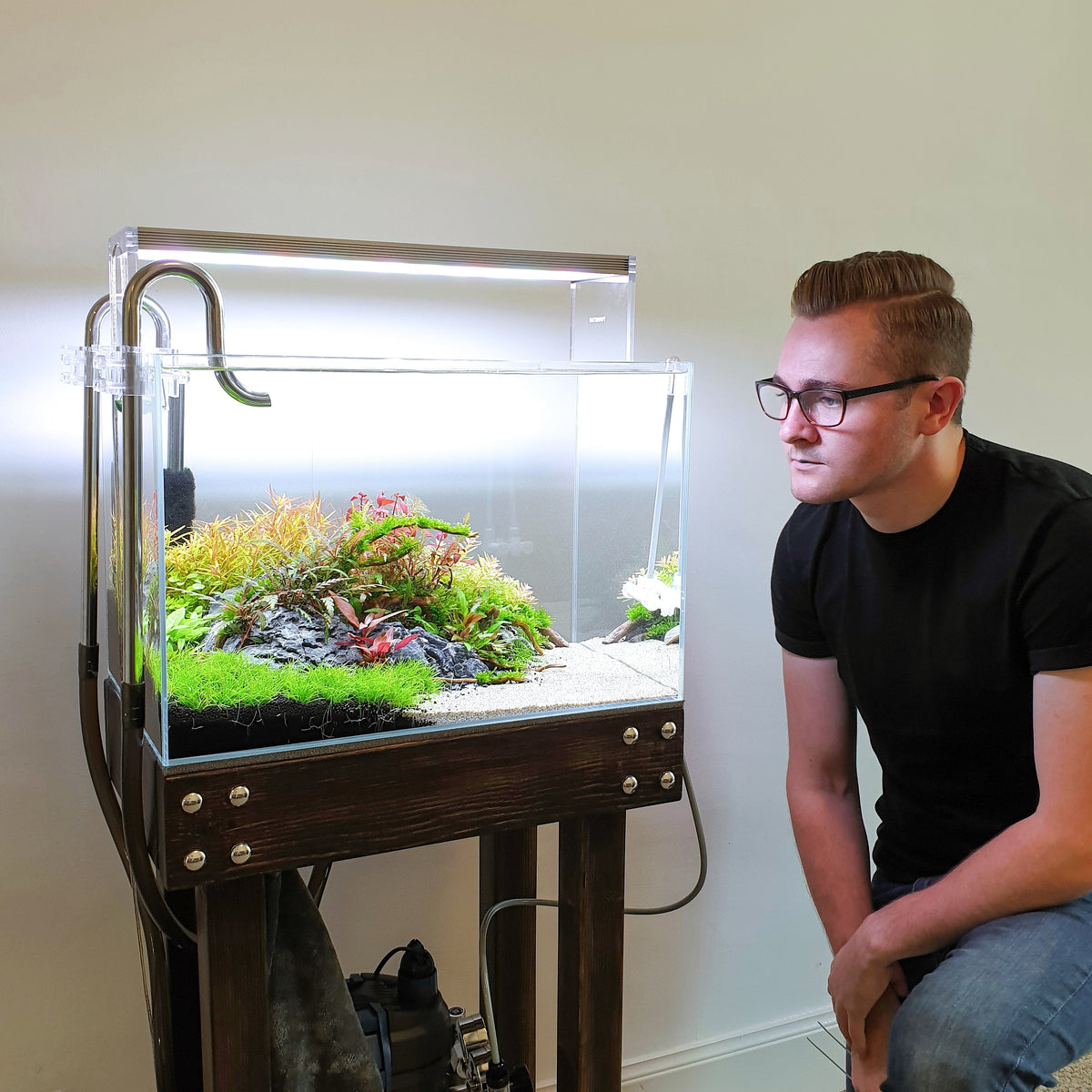
Aquascaping is the craft of arranging plants, stone and wood inside an aquarium so the finished tank reads as a landscape. The word covers both the design work and the layout it produces. Fish come second: the planting, the hardscape and the way the growth fills in over the following months are what an aquascaper shapes. See the story of our CO2Artist- Jordan- whose passion for aquascaping inspires hobbyists around the world.
Last updated: 16 October 2026
What does aquascaping mean?
Aquascaping is a form of art in which imagination and creativity play an essential role. I find great satisfaction sharing the creative process I go through while creating and maintaining my aquascapes. My main goal is to continue developing as an aquascaper while sharing my experiences with others. I do not know where this hobby will take me, but I know that I will enjoy myself along the way.
My first aquascape was a disaster! I had no idea what aquascaping was when I bought my first tank. It was not until I discovered beautifully planted aquariums online that I decided to create my own. I used a tiny amount of plants, no fertiliser, no co2, poor lighting and the list goes on. As expected, this did not work out well for me. This is the experience most people go through and without enough research, it is nearly impossible to succeed. Taking my failures into consideration, I tried again. I had more success and enjoyment out of this new aquascape so I decided to set up an Instagram page and share my hobby with others. The layout was not impressive but I was now addicted to aquascaping.

In my opinion, my most successful aquascape was a small Dutch-inspired layout that started as an experiment. I tried to keep the creation and maintenance as simple as possible, which led to an extremely successful aquascape. This aquascape was stem heavy with a full carpet of Micranthemum Monte Carlo at the front that required regular trimming. I decided to go very lean on fertiliser in order to keep excess nutrients to a minimum and avoid algae.
How do I start aquascaping as a beginner?
Using key principles and not overcomplicating everything lead my success as a beginner aquascaper. This was my most enjoyable aquascape to own as it involved very easy maintenance sessions without having to do any corrective maintenance. I recommend that new hobbyists should try creating a heavy planted layout as it taught me valuable lessons on maintaining plant health and trimming techniques.

In the last year, I have started engaging more with other aquascapers which has almost become just as enjoyable as the creative process itself! I have to give credit to the companies that have sponsored me because without them I would not have been able to create as much content or share as many of my experiences. Hopefully, in the future, I can continue to share these experiences and create an even stronger relationship with my audience. I really appreciate everybody that supports my hobby!

I will shortly be creating two new layouts using two aquascaping styles that I have never fully explored yet. I enjoy challenges like this as I believe it is important to push yourself outside your comfort zone to further improve at your craft. One of these layouts will be an Iwagumi style aquascape which features only rocks and plants. This style creates a very minimalistic appearance and although it may appear very simple to create this is not the case. Any imperfections in this style of layout would stand out. My other upcoming layout will be rather unusual and out of the box… literally out of the box! I plan to create a shallow pond tank, which will feature several emergent pond plant species at the back of the tank where the soil will be banked behind driftwood while keeping the front portion of the tank as open swimming space. Hopefully, through these new aquascape layouts, I can inspire others to experiment and create different styles of aquascaping.

Aquascaping is my passion. I feel very lucky to be part of such an amazing community of enthusiastic hobbyists. I look forward to all the new people I will meet in the future and the satisfaction I will gain from creating new layouts.
Aquascape styles described in this post
| Aquascape style | Hardscape and plants | What the post says about keeping it | Tried or planned |
|---|---|---|---|
| Dutch-inspired layout | Stem plants with a full carpet of Micranthemum Monte Carlo at the front; no hardscape named | Regular trimming of the carpet and lean fertiliser to hold excess nutrients down and keep algae away. | Tried, and the author's most successful aquascape so far |
| Iwagumi | Rocks and plants only, for a minimalistic look | The style is harder than it looks because any imperfection in the layout are clearly visible. | Planned |
| Shallow pond tank | Emergent pond plants at the back, soil banked behind driftwood, open water at the front | The aim of using this style is featuring a few emergent pond species at the back of the tank, while keeping the front of the aquarium as open swimming space. | Planned |
Frequently asked questions
What does aquascaping mean?
It means designing the inside of an aquarium — plants, stone, wood and open space — as a single landscape, then keeping it that way as the plants grow. The same word is used for the finished layout, so people talk about building an aquascape and about owning one.
What are the main aquascaping styles?
The styles most often named are Iwagumi, built from stone and a low carpet; layouts that combine wood and stone into a woodland or riverbank scene; and the Dutch style, which skips hardscape and sets dense groups of stem plants against each other. The layout described in this post was Dutch-inspired.
What is an Iwagumi aquascape?
An Iwagumi layout uses stone as its only hardscape, usually with a single carpeting plant across the floor. It is the hardest style to hide a mistake in: with nothing else in the tank, a stone set at the wrong angle or a gap in the carpet is the first thing a viewer sees.
How do I start aquascaping as a beginner?
Plant heavily on the first day, pick plants known to be easy, and keep the layout simple enough that you can trim it without taking it apart. Most first tanks fail from too few plants, weak light and no carbon dioxide rather than from a bad design idea.
Do you need CO2 for aquascaping?
Not for every layout — slow-growing plants under modest light can manage on the carbon the water already holds. Carpets, stem plants and anything you want to fill in quickly are a different matter: injected CO2 is what makes that growth dense and keeps it ahead of algae.
How much maintenance does an aquascape need?
Weekly, mostly: a water change, a trim of whatever is growing fastest, and a look at the glass. A heavily planted layout that is fed leanly tends to need less corrective work than a sparse one, because the plants take up the nutrients algae would otherwise use.
Sources
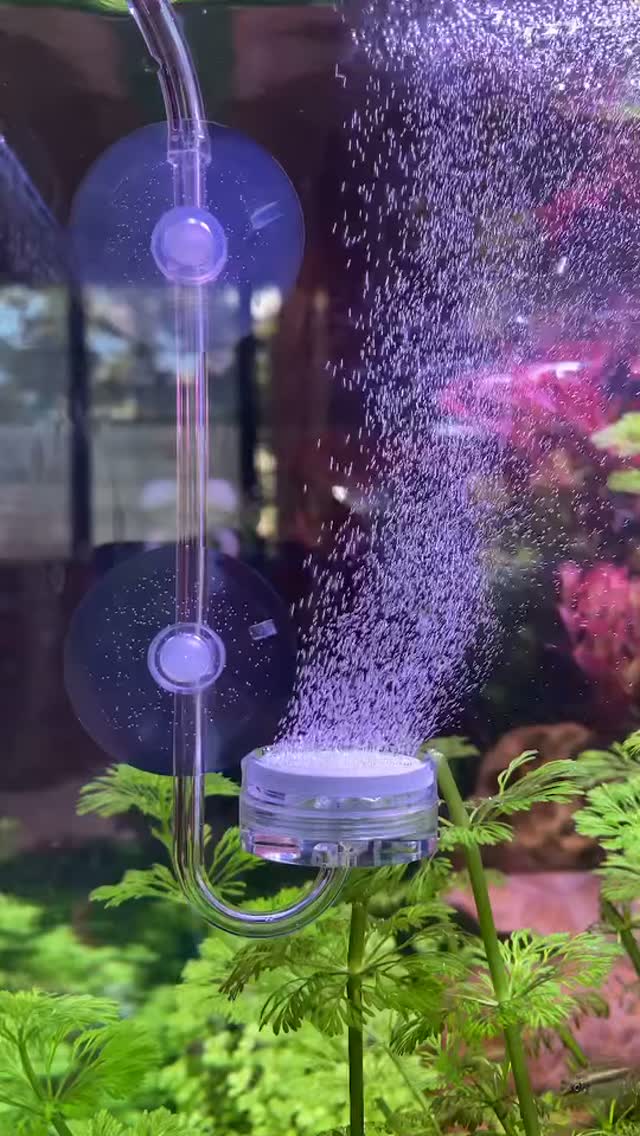
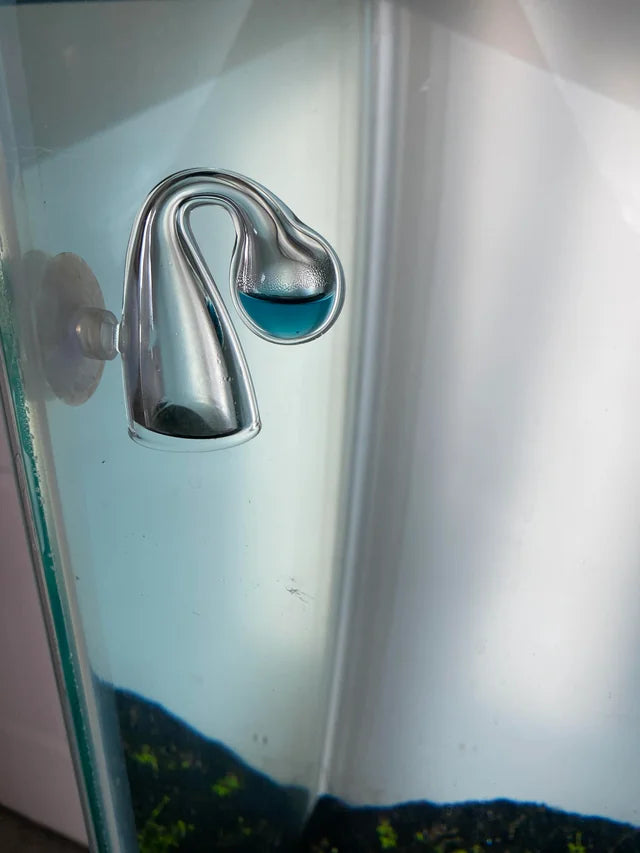
The carpets and stem plants most aquascapes lean on grow denser, and recover from a trim faster, when carbon dioxide is injected rather than left to whatever the water already holds. A regulator with a solenoid and a diffuser keep that dose steady through the lighting hours and shut it off at night, which is what keeps growth even and gives algae less room. A drop checker in the tank shows whether the level is where you want it before you change anything else. See the product.

Share:
The little things can make all the difference
Overcrowded aquarium - Why less fish in your fish tank is better