
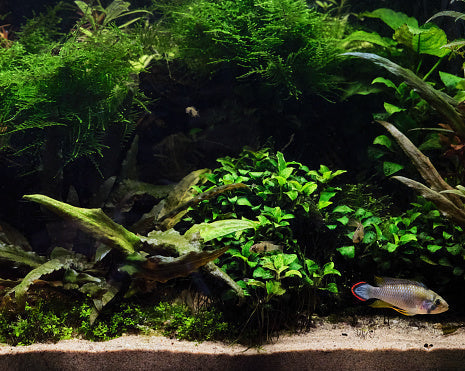
Planted Aquarium Substrate: Dirt, Aqua Soil, Gravel and Sand
A planted tank can thrive in dirt capped with fine sand, pelletized aquasoil, or gravel supplemented with fertilizer. The main differences are cost, how much sediment gets stirred up, and how easily you can move aquatic plants and change the layout.
How it started?
Before Takashi Amano revolutionized the planted tank hobby by introducing CO2 and before the introduction of “Aqua Soil”, hobbyists either use dirt capped with sand or just plain gravel. This was the old way but it does not mean that it’s wrong and the new way is better. It’s just another means of achieving the results of healthy plant growth.
Let’s start by comparing the benefits and disadvantages of the 2 planted aquarium substrates. Aqua soil was born out of the need to provide the aquarium owners a less silty option for the planted tank. This is the main advantage of this product when compared to dirt. With aquarium soil substrate, re-scaping is not a big problem as this substrate is bound by resin and is pelletized. There is a very little chance of ending up with cloudy water should the hobbyist decide to move live plants around and redesign the aquarium. Dirt, though messier can be as clean looking if executed correctly and the hobbyist should practically get the same results if dirt is used correctly. It's important to notice that the quality of planted tank substrate used, including sand and gravel, is very important as it will have impact on the development of aquarium plants, pH level and other water parameters.
Dirt or Aqua soil for a planted tank?
What Aqua Soil buys you
Aqua soil offers a substrate designed for planted aquariums. One of its selling points is its cation exchange capacity (C.E.C)—the ability to retain nutrient ions for plants to use. However, this property is not unique to aqua soil: clay and many ordinary soils have it too.
Aqua soil also does not guarantee an algae-free start. Some products release ammonia after flooding, so check the manufacturer’s startup instructions. A 9-liter bag can cost €20–€70, depending on the brand.
What dirt buys you
Dirt offers a lower-cost way to build a nutrient-rich substrate. Its ability to retain nutrients varies with its composition, with clay and organic matter contributing to its C.E.C.
Some hobbyists worry that dirt will trigger an initial algae bloom, but algae growth depends on several factors. Choosing aqua soil over dirt does not eliminate that risk.
How to set up a dirted planted tank layer by layer
The success of a planted aquarium depends largely on what soil is being used. A very rich substrate is not needed in this case. That will only cause problems later on. The term “Dirt” in this topic does not refer to garden soil. Garden soil is full of organic matter which will leach a lot of harmful microorganisms into the aquarium. Normal soil is recommended – the kind found in everyone’s backyard. Make sure the dirt does not have a lot of decaying matter in it. Aquatic plants, those found usually growing on soil that has had most of its nutrients washed away by the water. With exception of a few heavy root feeders most aquatic plants, especially stem plants get their nutrients from the water column and not the soil they are anchored on. It is this eco system that we aim to recreate on a dirtied aquarium setup. It is recommended to use at least 3 types of soil for this setup.
The clay or laterite base
Gravel, as the first layer is optional in this case. The bottom of the tank can be laterite or any form of clayish soil. Do not add fertilizers of any kind at this point. Should you decided to put root tabs later on, the clay should be able to absorb it so it can be readily available for your plant’s roots. Scatter the clay/laterite over the bottom of the aquarium or have it at maximum of an inch thick. Any thicker and the tank would be in danger of having air packets which will be disastrous in the long run. Do not wet your soil when applying it on your aquarium. Nobody wants to scape with mud.
The soil mix above it
The second layer should be a mixture of 1 part loam soil to 4 parts normal soil. This will be the main substrate to use in growing plants. Make sure the loam is composted properly and no longer contain decaying matter. Remove any leaf litter or twigs. Do not mix gravel with your soil. The Tank will only likely end up getting a substrate as hard a s concrete if you do so. Gravel will only make it hard for the roots to penetrate once the soil settles underwater. Avoid compacting the soil as well while you apply it. If desired, have at least 2-3 inches of this mixture on top of your laterite. Do not be afraid to use more if needed.
The sand cap
The last layer should be fine sand. You can use regular sand. This is done so you will not have the soil mixing with water. Do not use sand from the beach as it is bound to contain salts which will harm your plants. Make sure the sand is already washed and clear of silt. Do not use pea sized gravel as substitute for sand. Gravity will always pull the heavier objects down and you will soon end up having the gravel mix with your substrate in a few months’ time. Apply a thin layer on top of your soil. Maximum should be 3cm-thick at the back part and 1 cm thick at the front. Apply thin layers of sand on areas where carpeting plants are going to be placed. Carpeting plants especially Monte Carlo and HC Cuba have short roots. To ensure that the plant roots reach the substrate, apply the sand thinly. Be mindful of applying it too thinly as you might end up with a lot of silt in your aquarium. Applying more than 3 centimeters of it and there is a risk of the sand being compressed and locked with the soil which makes the soil hard. This setup is now ready to plant. Spray the soil with water to make for easier planting. While flooding the aquarium, make sure to poke the substrate to remove air pockets trapped in the substrate.
With this type of mixture and setup, there should not be any problems growing any type of live plants. This dirt mixture should allow for the addition of any fertilizing regiment like the E.I (Estimated Index) method. Like Aqua soil you can add root tabs after a year or a few months if you feel that the nutrients in the substrate is already depleted. To clarify, dirt does not cause the plant’s roots and stems to rot. Roots of some stem plants do in fact grow slower when planted in dirt compared to when planted in Aqua soil, but bear in mind that the main function of the roots for stem plants is so the plant can anchor itself. This should not be a hindrance as these aquarium plants have no problems absorbing nutrients from the water column.
Gravel and sand: which type and which grain size
If you decide to use gravel and/or sand in your planted tank instead of aqua soil, be sure to familiarize yourself with the types of substrate and the possibilities offered by each of them.
Quartz, river and basalt gravel
Gravel is a popular aquarium substrate, with the best grain size depending on the plants and fish you keep. Most plants root well in gravel measuring 1–3 mm. For fish that forage along the bottom, the source recommends smooth-edged gravel measuring 3–10 mm, though suitability depends on the species.
Quartz gravel is typically grayish or white, with smooth edges and a light color that contrasts with dense planting. River gravel combines gray, green and red tones for a natural appearance. Black basalt gravel makes pale fish stand out, but choose a rounded grade to avoid sharp edges that could injure bottom-dwelling fish.
Gravel alone supplies little nutrition, so root-feeding plants need fertilizer balls, sticks or tablets near their roots—one reason to consider a nutrient-rich layer of dirt or soil underneath.
Sand and volcanic substrate
Fine sand creates a smooth planting surface, but grain size alone does not determine how well water reaches the roots; compaction and substrate depth also matter. Volcanic substrates add color and texture, may supply micro- and macronutrients depending on their composition, and provide surfaces for bacteria involved in biological filtration.
How to prepare substrate before it goes in the tank
Thoroughly rinse sand and gravel before adding them to the aquarium to remove dust and loose debris. Some preparation methods also include boiling, though this is not normally necessary for aquarium-grade products. For the dirt-capped setup described above, wash the sand cap until the rinse water runs clear so it does not introduce extra silt. Ready-made planted-tank substrates are the exception: do not rinse them unless the manufacturer instructs you to, as washing can remove nutrients or break down the granules.
During water changes, use a gravel vacuum, or desilter, to lift light debris from the surface. Over a sand cap, hover the siphon gently above it to avoid disturbing the dirt underneath. An under-gravel filter can support biological filtration in a compatible gravel setup, but it does not replace routine cleaning and is generally unsuitable beneath a dirt-and-sand build.
Activated substrates: what the clay actually does
any active substrates for planted aquariums are based on clay or processed soil, formed into granules that roots can grow through. Clay helps retain nutrient ions and makes them available for uptake by roots. It can also bind certain potentially harmful substances, but this does not make the substrate a substitute for filtration or water changes. Fertilizer-enriched products provide an initial nutrient supply, while the granules offer surfaces for bacteria that contribute to biological filtration.
Their effects extend beyond plant nutrition. Many active soils lower carbonate hardness (KH) and help maintain a lower pH. Some also reduce general hardness (GH), although that depends on the product and the water you start with. These effects are not permanent: nutrient reserves become depleted, and the substrate’s capacity to influence water chemistry gradually declines. Check the manufacturer’s guidance rather than assuming every clay-based substrate behaves alike.
For a blackwater biotope, consider how the substrate interacts with humic compounds. Clay can adsorb some of these substances, but certain aquasoils also contain and release humic acids. The effect therefore depends on the formulation; active soil is not automatically unsuitable for blackwater.
Substrates that lower pH and hardness are generally a poor fit for African Rift Lake aquariums whose inhabitants require hard, alkaline water. Choose a substrate that supports those conditions instead of working against them.
In a biotope tank, substrate choice follows the fish’s native water conditions; in a general aquarium, appearance can guide the choice within the needs of its inhabitants.
Does a rich substrate replace CO2 and fertilizer?
A rich substrate helps feed plants, but it does not automatically replace CO₂ injection or additional fertiliser. Many aquatic plants absorb nutrients through their leaves as well as their roots, while heavy root feeders benefit particularly from nutrition below the surface. Plain gravel needs added nutrients; dirt and enriched aquasoil supply a reserve, but that reserve does not guarantee a complete diet indefinitely.
Carbon is a separate requirement. Decomposition in a dirt substrate can release CO₂, so saying that no substrate supplies carbon would be misleading. However, that supply is variable and cannot be controlled like injection. Where carbon availability limits growth, injected CO₂ can help a dirted or soil-based tank support faster, denser planting, provided lighting and other nutrients are adequate. It is not essential for every planted aquarium.
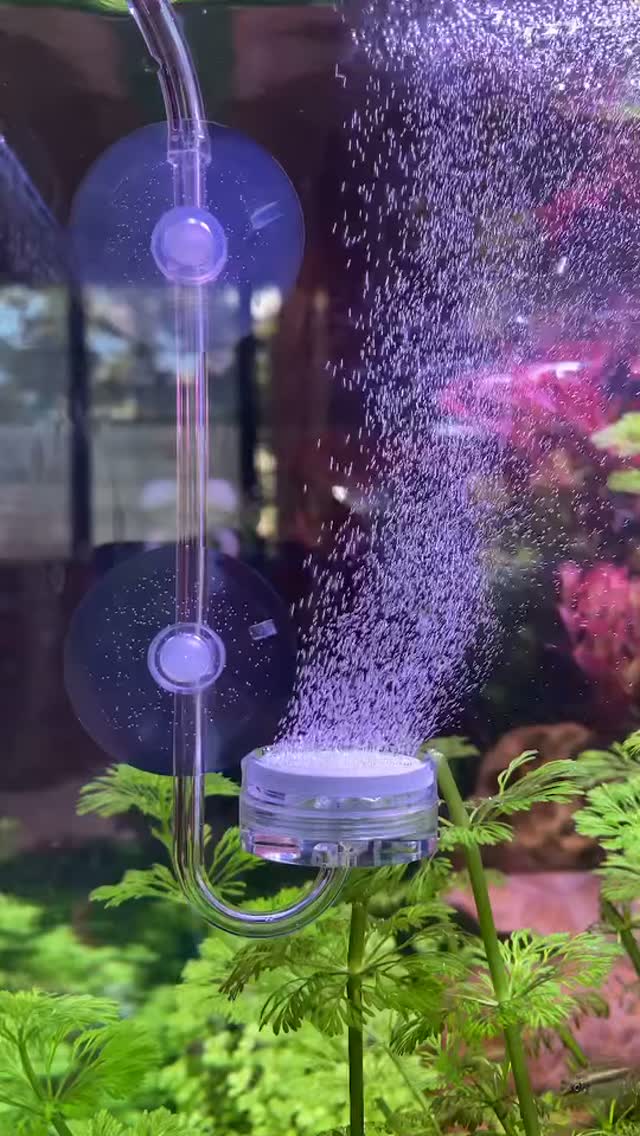
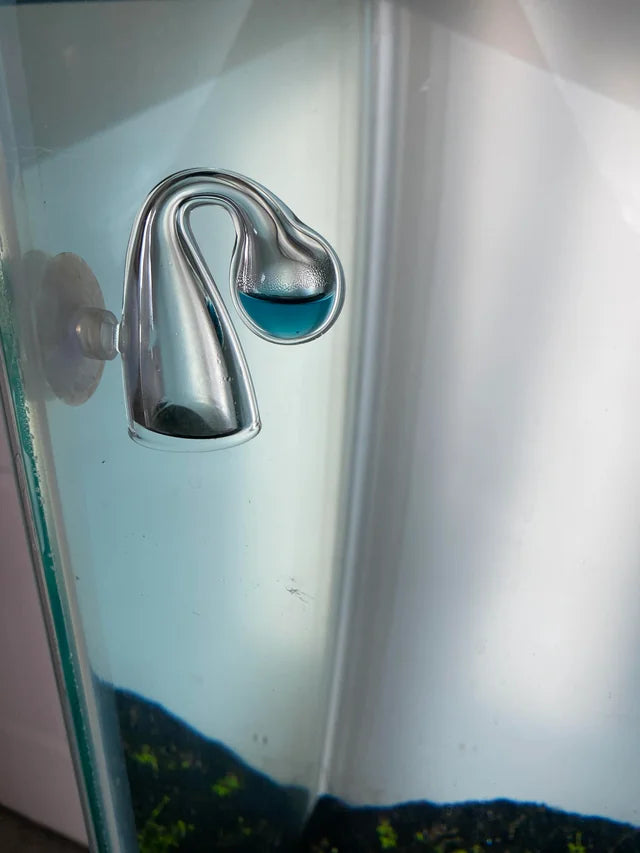
If you choose injection, match the delivery equipment to your setup. An inline atomizer suits a tank already running a compatible external filter. For a smaller scape, an in-tank diffuser offers a straightforward alternative. A drop checker provides a color-based indication of dissolved CO2, though its response is delayed.
Choose fertiliser according to the plants and the nutrients already available. A rich bottom layer is one part of plant care, alongside suitable light, available carbon and ongoing nutrient replenishment.
Summary
There are no special rules or tricks in dealing with dirt substrate in the planted aquarium. Like Aqua soil clarity can be a problem if you do not have sufficient filtration. Algae can be a nightmare if you do not watch your photo period and fertilization. For Aqua soil, the initial setup can be messy if you are not careful. This method does require a bit more work if compared to just buying aqua soil, but like anything else in this hobby once can either work on it or spend. The main point is healthy and good plant growth and both ways are effective if done well. Enjoy your dirted planted tank! It's live plants time!
FAQ
What is the best substrate for a planted aquarium?
There is no single best one. Dirt capped with fine sand, pelletized aqua soil and gravel enriched with fertiliser all grow healthy plants. The choice comes down to how often you rescape, how much silt you accept, and what you want to spend.
What gravel grain size suits aquarium plants?
Most plants root well in gravel of 1 to 3 mm. Where bottom-dwelling fish share the tank, a grade of 3 to 10 mm with smooth edges is safer for them. Gravel on its own carries no nutrients, so it needs fertiliser in the substrate.
Is dirt as good as aqua soil for growing plants?
Both work. Aqua soil is cleaner to rescape because it is bound by resin and pelletized, while dirt is messier but costs far less and holds nutrients just as well through its clay content. Done carefully, dirt gives the same plant growth.
Does aqua soil leach ammonia when you flood the tank?
Many brands release ammonia and nitrates the moment the tank is flooded, so the early algae bloom hobbyists fear from dirt can just as easily come from soil. Algae in those first weeks usually traces back to lighting and dosing, not to what is under the sand.
Do I still need CO2 with a nutrient-rich substrate?
Yes, if you want the growth most aquascapes are built around. Rooted plants take some nutrients from the substrate, but aquatic plants draw most of what they use from the water column, and carbon is the part the substrate cannot supply.
Whatever you scape over, carbon is the one thing the substrate cannot supply — see our CO2 systems and diffusers if you want the growth these layers are built for.

Share:
Biosecurity in a home aquarium
Proper Trimming of Aquarium Plants