
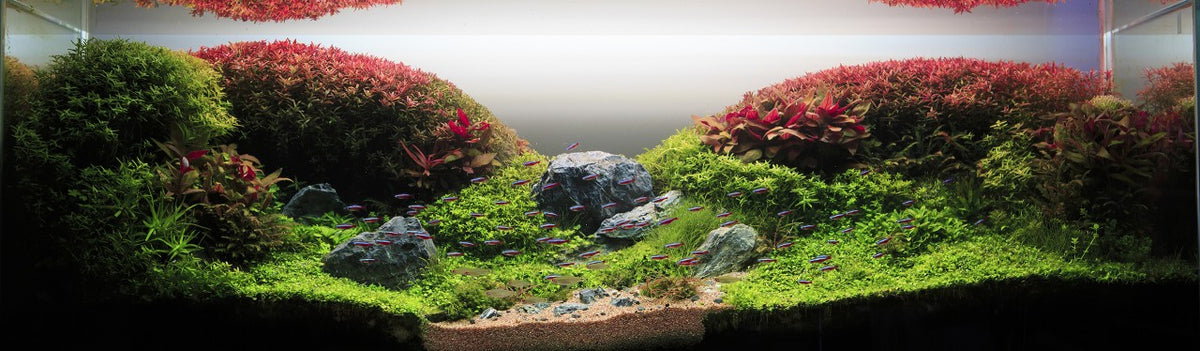
Aquascaping - the art of arranging aquatic plants within your aquarium to create a look which is pleasing to the eye. There are several different styles of aquascaping which are defined by the choice of plants, rocks or wood along with the overall appearance.
This month CO2 Art is going to take a closer look at three of the most common aquascaping styles and finding out just what defines them.
First up is the unmistakeable ‘Dutch Style’ aquarium.
Emerging from the Netherlands during the 1930’s via the Dutch Society for Aquarists, this early form of aquascaping does not require the addition of any hardscape materials such as wood or rock and instead focusses purely on the precision arrangement of aquatic plants based on their colour and texture.
Today the Dutch style aquarium is being mastered by Willem van Wezel and Bart Laurens. Both of their aquariums can be seen below.
Dutch style requires a certain level of understanding surrounding the behaviour of the plants. Very much in the same way a reefkeeper must consider each corals lighting & water flow needs when positioning each coral, an aquascaper creating a Dutch style must fully understand the needs of each species of plant used inn order to have success.
Generally, the use of stem plants is advised because of their faster growth rate. These plants also offer many different leaf shapes, colours and textures all go towards a very attractive layout.
The great Dutch style aquascape is often likened to a real garden by the way each plant is grouped in rows or layers with almost 100% of your substrate being covered with plants. It is wise to plan your entire aquarium in advance. Take into account your aquarium size, shape. Your lighting is very important too. Many plants require high lighting to achieve the vibrant colours. CO2 injection is essential too.
Fish in a Dutch aquarium, much like the plants, are chosen specifically to highlight the layout. Shoaling fish such as tetras work well. The fast colours darting between the different textures of each plant can be stunning. Many people attempt to add fish with particular behaviours. The idea is to have fish in each layer of the aquascape to maintain movement throughout.
Maintenance requires lots of trimming and as far as aquascapes go, the Dutch style is one of the most challenging and requires lots of discipline. However, if you know your plants and are a little bit of a perfectionist then this is the style for you.
Things you will need:
- Aquascaping scissors
- Long nosed planting tweezers
- Plant Substrate
- Liquid Fertilizer or EI Dosing kit
- CO2 Kit
- Knowledge of aquatic plants
- Lots of patience
- Selection of good quality aquatic plants
Many aquascapers view the Dutch Style as one that requires a great deal of discipline with rules that must be adhered to in order to achieve success. One particular aquascaper Bart Laurens, created a well known 1000L dutch style aquarium. Bart demonstrates the concept of Dutch style perfectly with this aquarium.
Bart Laurens 1000l Dutch Style aquarium
If your a fan of the Dutch style aquariums, why not send us a photo. Visit us on Facebook or tag us on Instagram
Double or Nothing by Aquascaper Zsolt Kucs

Red and Green Live by Aquascaper Gil Cariri

Classic Dutch by Aquascaper Pavel Skorupa


Share:
How to Add Plants to the Aquarium
The Nature Aquarium