
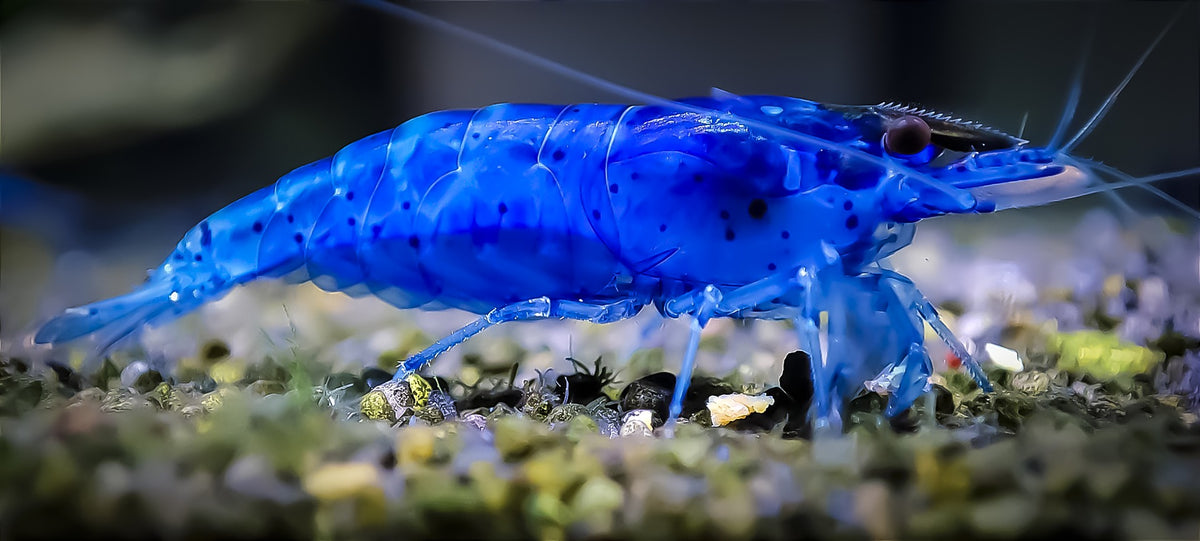
Blue velvet shrimp in the aquarium
Freshwater shrimp are perfect creatures to any nature aquarium with equally peaceful inhabitants. One of the shrimp species you can have in your own tank is blue velvet shrimp. This creature will definitely bring the contrast to your shrimp tank.

Blue velvet shrimp in natural habitat
This shrimp species is a morph of the red cherry shrimp (Neocaridina davidi) which occurs in India and Taiwan. The blue velvet shrimp do not occur in nature.
Blue velvet shrimp in the freshwater aquarium
Fancy having this blue shrimp in your own tank? See the blue velvet shrimp care requirements and prepare you aquarium for the new star!
General characteristics
Neocaridina Blue Velvet Shrimps are shrimps recommended for beginner shrimp enthusiasts as well as for experienced shrimp keepers. They are characterized by a blue / navy blue - sometimes slightly translucent - coloration on the entire body of the shrimp. Blue velvet shrimp lifespan is about 1-2 years in good water parameters. Recommended minimum tank size is 20l.
Function in the aquarium
Apart from uncommon appearance of blue velvet shrimp, this shrimp is a perfect cleaner when it comes to algae bloom! They are also helpful when any bio film appears on plants.
Water parameters
Shrimps are generally sensitive creatures although shrimp from Neocaridina family are considered as easier to keep. Therefore maintaining stable water parameters is essential. For this shrimp species pH 6,8 - 7,8 is acceptable, water temperature 20-26 degrees Celsius. GH 8-20 and KH >2.
Tank mates
Blue velvet shrimp will get along with other dwarf shrimp but it's recommended not to combine them with shrimp from the same family Neocaridina. Also blue velvet shrimp can be kept with small aquarium fish or even nano fish depending on the tank size.
Feeding
This beautiful freshwater species eat algae, eagerly eat steamed nettle leaves, mulberries, and specialized foods.
Summary
Blue velvet shrimp is shrimpastic! If you are just getting started with shrimps, this species is a great choice!

Share:
Pros and cons of aquarium cover
Why do you aquascape?