
Key numbers
- Flowgrow records each plant's temperature tolerance on a 0 to 35 °C scale, so you can check a floating species against an unheated or a tropical tank before buying it. (FlowGrow)
- The same database filters plants by water chemistry, covering pH values of 4 to 9 and carbonate hardness from 0 to 30 °dKH, which spans soft and hard tap water alike. (FlowGrow)
Floating aquarium plants grow at the water surface with their roots hanging free. They take nutrients from the water and, where their leaves sit above it, carbon dioxide straight from the air. Keepers use them to shade bright tanks, shelter fry and absorb nitrate. Common species are duckweed, water lettuce, floating fern, floating crystalwort and Amazon frogbit.
Last updated: 26 October 2026
It happens that the lighting in the aquarium is too strong and needs to be shaded. This can be beneficial for fish - species that like less light exposure. In this case (and not only), floating aquarium plants work well. Which species are worth choosing? Below we present the list of 5 the most recommended floating plants by CO2Art Experts.
How to arrange floating plants?
Plants that float on the surface of the water mirror, apart from the above-mentioned function, provide more arrangement options. The slightly shaded tank, which shows green on the surface, looks more natural. Plants also indirectly fight algae. They are hiding places for smaller fish, and sometimes even "platforms" for building nests. However, you have to be careful - floating plants grow excessively. They can also burn, so it is worth pouring a little less water into the tank than normal. If possible, it is also recommended to use lighting that does not cause excessive heating of the air between the cover and the water surface. The list of floating species for aquarium purposes is shorter in comparison to traditional ones, planted in the ground or attached to permanent elements. However, you can still try an interesting arrangement. Here it is better not to overdo the variety, placing no more than 1-2 species on the surface.
Aquarium floating plants
Duckweed (Lemna minor) is one of the most popular floating plants, used in aquarium hobby from its beginnings. A single copy is 3-5 mm wide. The leaf blade is made of several miniature leaves. In its center there is a root, which is responsible not only for the uptake of nutrients, but also for the stable floating of the plant on the surface. It happens that the duckweed blooms, but it is not common. The species grows well in a wide temperature range (15-33 ° C) and is therefore suitable for both coldwater and tropical aquariums. It is distinguished by a fast growth rate - it must be monitored on an ongoing basis. It has quite high lighting requirements. Effectively absorbs nitrates. It can be food for herbivorous fish.
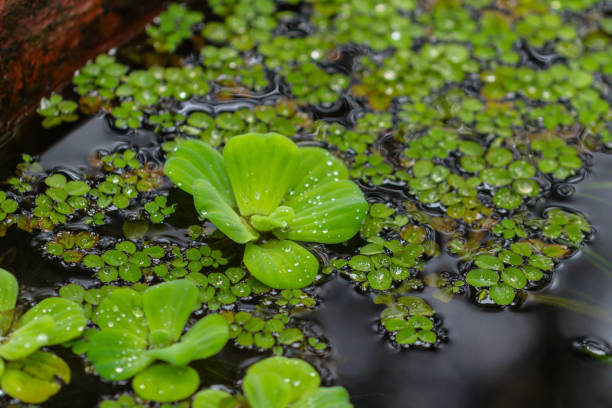
The water lettuce (Pistia Stratiotes) which is so-called due to its striking appearance, and also Nile lettuce due to its origin. It grows up to 10 cm. It produces fleshy, suede, light green leaves that form characteristic rosettes. Its roots are delicate, but long and dense. They also have great decorative value. At the same time, they are a great, safe hiding place for fry. The plant can bloom - the flowers are tiny, yellow, growing on an inflorescence shoot. The water lettuce is an expansive and invasive species (its cultivation is prohibited in some parts of the world). It is harmless in an aquarium for a simple reason - it will not go beyond its limits. The treatment is similar to that of duckweed, from time to time you need to catch some of the plants. It grows best in warmth (optimal temperature is 25-27 ° C). It performs well in both soft and hard water. It likes humid conditions, but is sensitive to moisture that condenses on the leaves. The leaf blades can then be affected by diseases, as a result they turn yellow, brown and die.
Floating fern (Salvinia natans) - is a fern naturally occurring in Africa, Central Europe, Asia and South America but was introduced into almost every part of the world. Like duckweed, it can be grown in a wide temperature range (12-30 ° C) and is therefore also suitable for coldwater aquariums. It has one major drawback - it is an annual plant. That is why in tanks it is mainly decorated in summer, in winter it usually dies. The spores hibernate in the substrate and float to the surface in spring. Salvinia produces round or elliptical water leaves and root-like underwater leaves. There are fine hairs on the leaves. The plant provides a good shelter for fish. It is quite demanding - you need to feed it with multi-component fertilizers.
The floating crystalwort (Riccia fluitans) is a species of liverwort that can be grown in two ways. The plant sometimes attaches to the substrate or aquarium objects (e.g. roots). At the same time, it can swim freely, floating close to the surface. It creates characteristic spheres or carpets composed of small, light green, sticky thallus. It can be destroyed by some herbivores, omnivores or just curious fish. It tolerates a wide temperature range (10-30 ° C). Swimming specimens do well in normally lit aquariums. Those placed at the bottom should be provided with intense lighting. It likes soft waters. It cleans the tank well from excess nitrates and phosphates. It is a shelter for fry. Labyrinth fish use it to build nests. Care must be taken with excessive expansion so that the dense floating crystalwort coating does not reduce the water-air gas exchange.
The Amazon frogbit (Limnobium laevigatum) produces rosettes composed of heart-shaped leaves up to 3 centimeters in diameter. If the water has enough nutrients and good lighting, new leaves appear on the surface of the water and above it, and the layer can be up to 5 cm long. It creates long roots that provide good shelter for dwarfs and other fish that like to be among the roots of floating plants. The lower part of the mat formed by floating plants is not decorative in the aquarium, but without a decorative effect it is impossible to achieve uniform growth throughout the year in the aquarium. Limnobium can be grown in a tropical aquarium at a temperature of 20 to 30 ° C. In cooler water, it significantly slows down its growth. It grows slightly better in soft water. Water hardness not more than 10-12 °, pH does not matter, pH 6.0-7.5. It needs a layer of warm and humid air above the water surface. Regular water changes are desirable, but the plant itself feels better in old water.
To sum up, floating plants are not only the decorative element of the planted tank but also a helpful one. Remember that different species of fish have different lightning requirements and by using floating plants you can partially shade your aquarium to improve its inhabitants lives!
Floating plants on this page at a glance
| Floating plant | Temperature range the page gives | Size the page gives | Water and light the page notes | What it does in the tank |
|---|---|---|---|---|
| Duckweed (Lemna minor) | 15–33 °C | 3–5 mm wide | High light needs | Absorbs nitrates; food for herbivorous fish |
| Water lettuce (Pistia stratiotes) | 25–27 °C (the optimum) | Up to 10 cm | Soft or hard water; likes warmth | Long roots hide fry; spreads, so thin it out |
| Floating fern (Salvinia natans) | 12–30 °C | 1-3 cm | Low light needs | Shelter for fish; annual, so it dies back in winter |
| Floating crystalwort (Riccia fluitans) | 10–30 °C | 3-5 cm | Likes soft water; normal light while it floats | Clears excess nitrates and phosphates; nests for labyrinth fish |
| Amazon frogbit (Limnobium laevigatum) | 20–30 °C | Leaves to 3 centimeters across | Soft water; good light; pH 6.0–7.5 | Long roots shelter fish that like to hide in them |
Frequently asked questions
Which floating plants are best for a beginner aquarium?
Duckweed, water lettuce, floating fern, floating crystalwort and Amazon frogbit all grow without injected carbon dioxide and tolerate a wide range of tank temperatures. Start with one or two kinds rather than a mix: each spreads quickly, and thinning a crowded surface is the main job they bring.
Do floating plants need soil or substrate?
No. Their roots hang free in the water and take nutrients from it, so floating plants work in a bare tank as well as a planted one. Soil or aquarium substrate is there for the rooted plants below, and garden soil is not needed for floaters at all.
Do floating plants block the light for plants below?
Yes, and that is usually why keepers add them. A mat at the surface softens strong lighting for shade-loving fish and plants, but a carpet or stems underneath will slow down and drop leaves if the cover closes over. Thin the mat and leave open water.
Do floating plants stop algae in an aquarium?
They help, they do not cure it. Fast-growing floaters take up the nitrate and phosphate algae also use, and their shade cuts the light reaching the glass. Algae in a planted tank usually come back to light, carbon and nutrients being out of step with each other.
Can you keep floating plants in a tank with injected carbon dioxide?
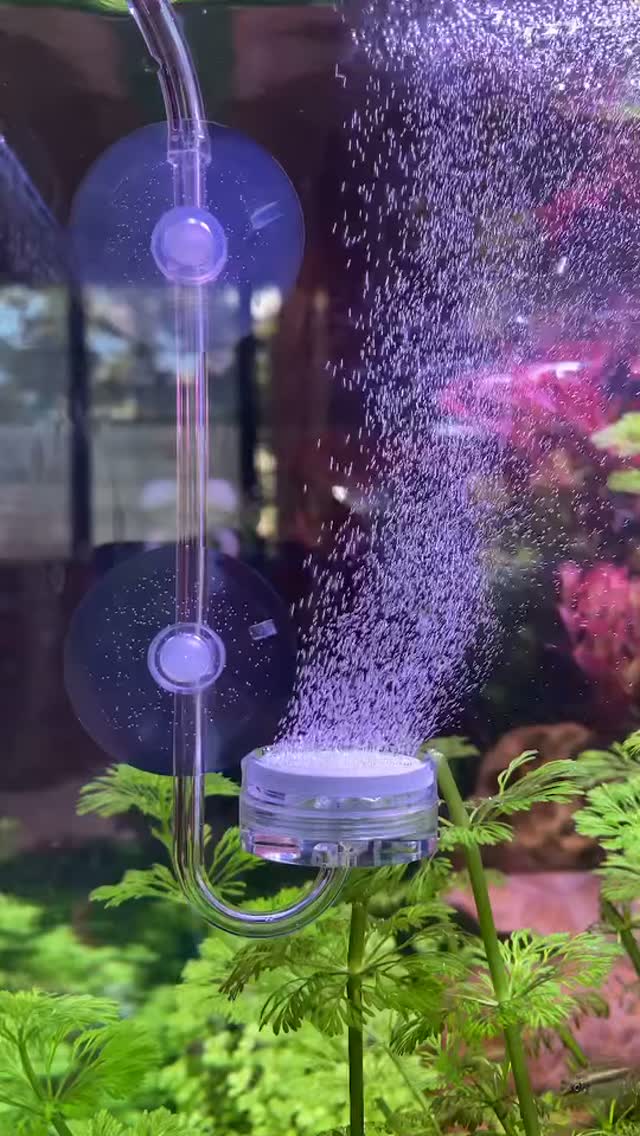
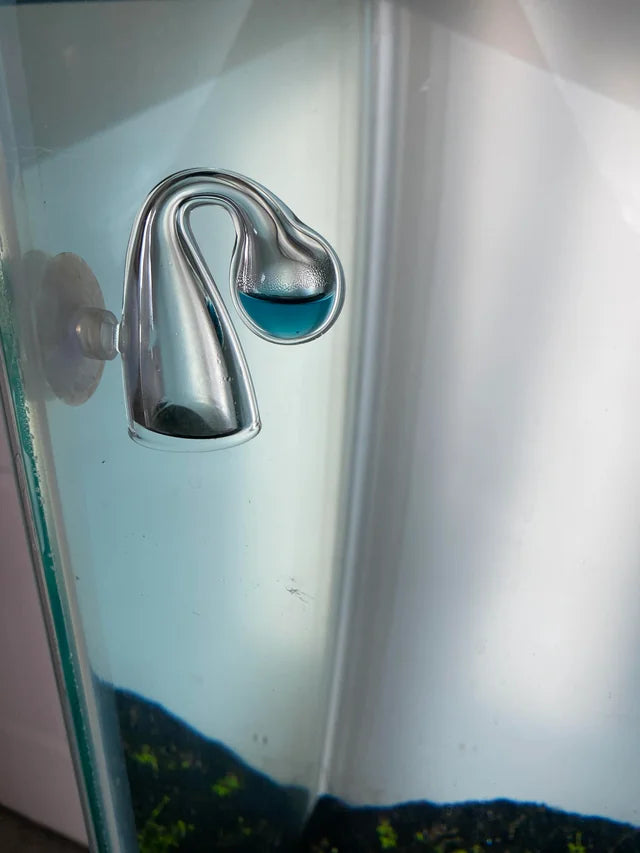
Yes, and many planted tanks do. A closed mat slows the exchange at the surface, so leave part of it open, watch the drop checker colour and change the bubble rate in small steps. Fast floaters also take nutrients, so the plants below need steady fertiliser.
How do you stop floating plants from taking over the surface?
Scoop a handful out at every water change and keep only a couple of species. A floating ring or a loop of airline across one end holds them in place, and a lid that traps warm, humid air above the leaves keeps them from burning under the lamp.
Sources
Floating plants are the one group in a planted tank that does not depend on injected carbon dioxide: their leaves sit at or above the surface and take carbon from the air. The stems, carpets and rosettes rooted below do depend on what is dissolved in the water, and a surface covered edge to edge slows the exchange that brings that level back down overnight. Keep part of the surface open and read the colour in a drop checker before you touch the bubble rate. See the product.

Share:
The ocellate river stingray- an impressive species in home aquarium
Influence of temperature on the embryonic and later development of fish